





Summary:
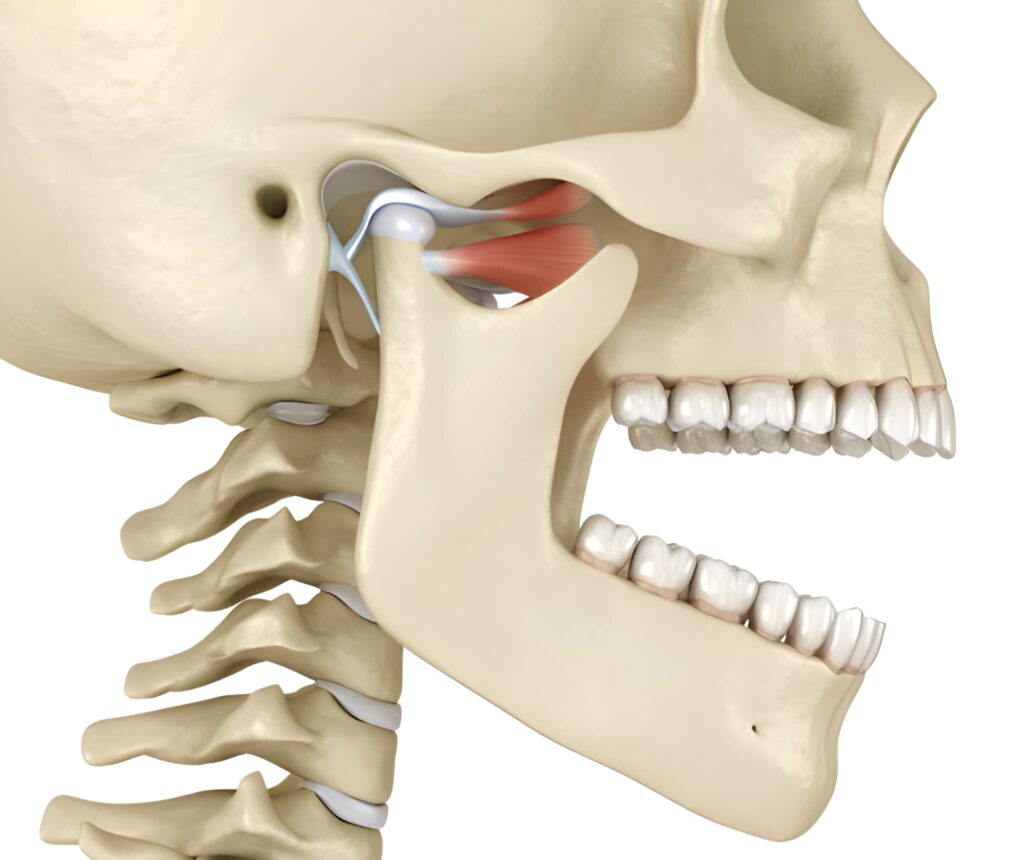
The temporomandibular joint, also termed TMJ, is the small but powerful hinge that connects your lower jaw to the bones on the side of your skull.
You can feel the joint working right in front of your ears. This joint helps you to do some of the most natural movements you make every day, like chewing, speaking, biting, and even yawning.
It is crucial for you to know and have the clarity that TMJ is the name of the joint and not the disorder. The problems that are linked to this joint are called TMJ disorders (TMD). Many people get confused between the two.
In fact, TMJ issues are more common than people might realize; almost 10-15% of adults experience TMD at some point in their lives. In this article, we will cover:
- What Is TMD? Understanding the Disorder
- Key Differences Between TMD and TMJ
- Common Symptoms of TMD
Continue reading to learn more about TMD vs. TMJ and understand the differences between the two oral conditions.
What Is TMD? Understanding the Disorder
Temporomandibular Joint Disorder, commonly referred to as TMD, is a condition that affects the temporomandibular joint that connects your jaw to the skull. Most people confuse TMD with the TMJ (temporomandibular joint), but actually, they are not the same thing.
In simple terms, the TMJ is the joint, while TMD is the disorder that causes pain, stiffness, or clicking in that area.
What Causes TMD?
Several everyday factors can lead to this condition, such as:
- Jaw injury from accidents or sudden impact
- Teeth grinding or clenching, often during sleep
- Arthritis, which affects joint function
- Stress, which makes you tighten your jaw muscles
- Bite issues, where teeth don’t fit together properly
As mentioned above, some factors can irritate the TMJ, leading to discomfort while performing simple daily activities, such as chewing, talking, or even resting your jaw.
If you notice ongoing jaw pain or clicking sounds, contact a dentist in Killen, TX, who can help you identify the cause and provide the proper treatment. Early care and detection often make recovery much smoother.
Key Differences Between TMD and TMJ
When people discuss jaw pain, they unknowingly often mix up the terms TMJ and TMD, but in fact, they are entirely different things. Here is the simplest way to understand it:
TMJ = The Joint
Your TMJ, or tempromandibular joint, is the actual jaw joint that helps you perform daily activities like talking, chewing, and opening and closing your mouth. Everyone has two TMJs, one on each side of their mouth.
TMD = The Disorder
Temporomandibular disorder (TMD) refers to any problems that affect your TMJ joint, the surrounding muscles, or both. If you feel pain, clicking sounds, stiffness, or difficulty in moving your jaw, these are all signs that you are suffering from TMD.
Why People Confuse the Two
Most people use the term TMJ to describe pain or discomfort simply because it is the more familiar term. This ultimately leads to the common assumption that TMJ means jaw pain, when in reality, TMJ is just the joint, and TMD refers to the pain or any kind of disorder.
Why the Difference Matters
Knowing the difference helps with:
- Proper diagnosis: Your dentist needs to identify whether the issue is with the joint, the muscles, or both.
- Proper treatment: TMD treatments vary; some focus on muscles, others on the joint structure.
Understanding these two terms makes it very easy to discuss them with anyone, especially with your dentist, about your symptoms and get the proper care.
Common Symptoms of TMD
Temporomandibular Joint Disorder (TMD) can show up in many different ways, and it is critical to remember that the TMJ itself does not cause you any symptoms. Any discomfort comes from the disorder, not the joint. Here are some of the most common signs you might notice:
1. Jaw Pain or Tenderness
One of the first and foremost things that most people feel is a dull ache or soreness around or in the jaw. While eating or talking, the pain can come and go or might even get worse.
2. Clicking, Popping, or Grinding Sounds
When you open or close your mouth, you usually hear a kind of noise. These sounds you hear do not always indicate a serious issue, but when paired with discomfort, they can point to TMD.
3. Locking of the Jaw
Some people also report feeling their jaw catch, making it hard to move. In more severe cases of the disorder, the jaw might temporarily get stuck in an open or closed position.
4. Difficulty Opening or Closing the Mouth
Simple daily activities like yawning, chewing, or even speaking can feel tight, and you might want to limit them due to unbearable pain.
5. Headaches, Ear Pain, or Facial Soreness
TMD often causes pain that spreads fast, especially around the temples, behind the ears, or across the cheeks.
6. Wear on Teeth from Grinding
If you grind or clench your teeth often without realizing it, it can lead to flattened, worn-down teeth, which is another common sign of TMD.
Effective Treatment Options for TMD
A TMD or TMJ dentist in Killen, TX, will offer you several effective treatments if you are struggling with jaw pain or discomfort.
Common Treatments Include:
- Physical therapy or simple jaw exercises
- Custom night guards to prevent teeth grinding
- Anti-inflammatory medications for pain relief
- Stress-management techniques to ease jaw tension
- Bite adjustments to improve jaw alignment
- Hot or cold therapy to soothe sore muscles
FAQs
Q. Is TMJ the same as TMD?
No. TMJ refers to the jaw joint itself, while TMD describes problems or disorders affecting that joint.
Q. Can TMD go away on its own?
Yes, mild TMD can improve with rest, gentle exercises, and stress management. But if the case is severe, you might need treatment.
Q. What causes TMD flare-ups?
Common triggers include stress, teeth grinding, poor posture, and excessive chewing.
Q. Is jaw clicking always a sign of TMD?
It is not mandatory. Clicking sounds can be harmless as well, unless they come with pain, stiffness, or difficulty in opening your mouth.
Conclusion
Understanding the difference between TMJ, the joint, and TMD, the disorder, can make it easier to recognise when something is not right. If you are dealing with jaw pain, clicking, or ongoing discomfort, getting a professional diagnosis is the best way to find real relief.
If you are experiencing persistent jaw discomfort, the team at our Killeen, TX dental office is always here to help you. Reach out today to book your appointment and start your journey towards a healthier, more comfortable smile.
Takeaway
- TMJ is the joint, while TMD is the disorder that causes pain, stiffness, or clicking in that area
- If jaw pain, clicking, or stiffness persists, a Killeen, TX dentist can provide proper diagnosis and relief.
- Ready to make a difference in your smile? Visit our experts at Killeen Dental Group today!